Making your dog’s food at home is a wonderful way to show love. You know exactly what goes into their bowl, you can avoid preservatives, and there is something deeply satisfying about seeing your furry friend eagerly devour a meal you prepared with your own hands. But homemade dog food also comes with big responsibilities.
This guide will walk you through everything you need to know—the benefits, the risks, a sample recipe to get you started, and most importantly, how to do it safely.
Why Consider Homemade Dog Food?
Many pet parents are drawn to homemade meals for good reasons. The most common motivation is control over ingredients. You get to choose high-quality, human-grade proteins and fresh vegetables, avoiding artificial additives and fillers that worry you .
Another major benefit is managing food allergies or sensitivities. If your dog has chronic itchy skin, digestive upset, or ear infections, a homemade diet allows you to carefully control which proteins and carbohydrates they eat . This can be a lifesaver for dogs who don’t respond well to commercial options.
Many owners also find that homemade food is highly digestible, leading to firmer stools and less waste . Plus, for picky eaters, a fresh, home-cooked meal is often much more appealing than kibble .
The Serious Risks You Need to Know
While the benefits are real, the risks are equally serious. This is the most important section of this guide.
Nutritional Imbalance is the #1 Danger. Studies have shown that a staggering percentage of homemade dog food recipes are nutritionally incomplete. One major study from the Dog Aging Project analyzed 1,726 homemade diets and found that only 6% had the potential to be nutritionally complete . Another study found that 95% of recipes were deficient in at least one essential nutrient .
This isn’t just a minor issue. Deficiencies in calcium, vitamin D, zinc, and other nutrients can lead to severe health problems over time, including bone disease, heart problems, and organ damage . There have been case reports of dogs suffering from severe clinical malnutrition while being fed unbalanced homemade diets .
Here are other common pitfalls:
- Toxic Ingredients: It is surprisingly easy to accidentally use something dangerous. Garlic and onions are toxic to dogs but are often found in broths and seasonings . Grapes and raisins are also highly toxic and must be avoided .
- Inconsistent Ingredients: Even if you follow a recipe, the nutritional content of meat and vegetables can vary significantly based on sourcing and cooking methods . The databases used for formulating homemade dog food diets are actually made with humans in mind, so the nutrient profiles may not be accurate for dogs .
- Client Drift: Even when given a perfectly balanced recipe, many pet parents make changes. One study found that around 30% of owners admitted to changing the recipe, and more than a quarter didn’t include necessary supplements at all .
- Time and Cost: Preparing a complete and balanced diet at home is time-consuming and can be more expensive than many commercial foods, especially when you factor in the necessary supplements .
A Simple Starter Recipe to Try
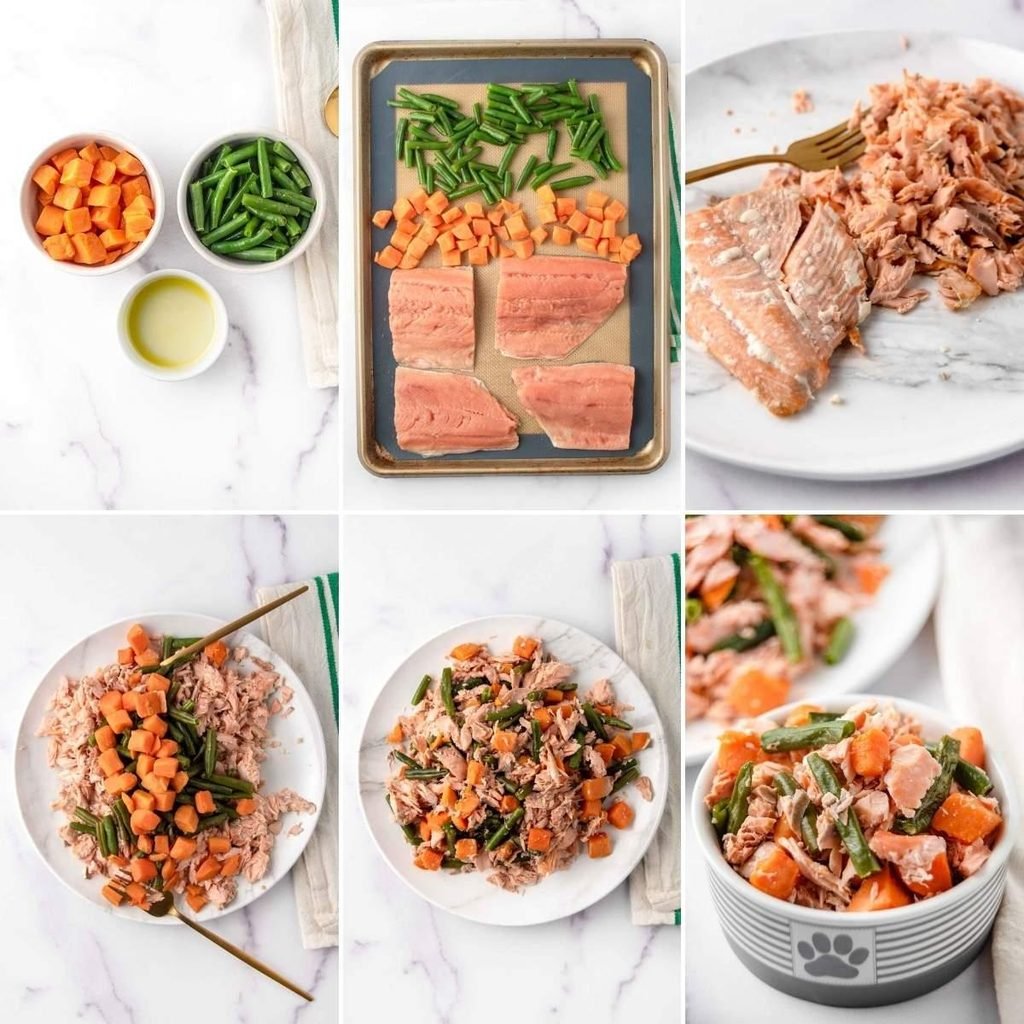
If you are ready to give homemade dog food a try, this recipe is a good starting point. It was shared by an owner and provides a simple framework. Remember, this is a starter recipe and should not be fed as a complete diet without veterinary guidance .
Ingredients:
- 2 lbs ground beef (90% lean)
- 2 eggs
- 1/2 cup spinach
- 2 carrots, chopped
- 2 oz broccoli
- 2 oz peas
- 1 beef liver
- 1 cup cooked white rice
- 1 can sardines in water, drained
- 1.5 oz pumpkin puree (100% pure, not pie filling)
- 1 tbsp hemp seed oil
- 1 tsp turmeric
- 1 tsp root ginger
- 1 scoop kelp powder
Instructions:
- In a large pot, cook the ground beef on medium heat. Break meat up into small bite-size pieces and let it brown for several minutes. The beef has finished when it is evenly browned and shows no signs of pink .
- In a food chopper, add the spinach, broccoli, carrots, peas, and beef liver. Blend until everything is a puree .
- Add your blended veggies into the pot and mix on medium heat for a few minutes .
- On low heat, add the hemp seed oil, turmeric, kelp powder, and root ginger .
- Drain the can of sardines and mix them into the pot. Make sure to break them up into small pieces .
- Add the cooked rice and eggs into the pot and mix everything together .
- Turn the stove off and let it cool. It can take about two hours to cool safely .
- Once cooled, serve an appropriate portion for your dog. You can also add a few blueberries on top for an antioxidant boost .
Portioning and Storage:
- Store one week’s worth in the refrigerator and freeze the rest in portion-sized containers .
- Refrigerated food should be used within 4-5 days; frozen food can last up to 3 months .
An Alternative One-Skillet Recipe
For a different protein source, this recipe uses ground turkey and barley .
Ingredients:
- 2 tablespoons olive oil
- 3 lbs ground turkey
- 1 quart beef broth (check for no onion/garlic)
- 1-2 sweet potatoes, sliced thin
- 1 bunch spinach
- 2 bags frozen peas and carrots
- 1.5 – 3 cups traditional barley
- 2 tablespoons turmeric
Instructions:
- Heat olive oil in a large skillet and cook the ground turkey until done .
- Add the sliced sweet potatoes and cook for about 5 minutes .
- Pour in the beef broth .
- Add the barley, spinach, and peas/carrots .
- Stir in the turmeric. Introduce it gradually to see how your dog tolerates it .
- Let it cook for about 30 minutes until the barley is well done, then reduce the heat and let it simmer for another 30 minutes .
- Let the food cool completely before serving. It can take about two hours to cool safely .
Storage: This recipe makes enough for multiple weeks. Store one container in the fridge and freeze the rest .
The Safe Way to Feed Homemade Dog Food
To do this safely and responsibly, you must go beyond just finding a recipe on the internet. Here is the professional advice:
Consult a Board-Certified Veterinary Nutritionist. This is the single most important step. A specialist can formulate a diet that is precisely tailored to your dog’s age, weight, breed, activity level, and health conditions . They will tell you exactly what to feed and what supplements are necessary.
Use Professional Formulation Tools. Websites like Balance.it and PetDiets.com are approved by veterinary nutritionists. They allow you to select ingredients and generate a recipe that meets AAFCO nutritional standards .
Don’t Substitute or Guess. If you are given a recipe, follow it exactly. Do not swap ingredients, change quantities, or skip supplements. Even small changes can create a nutritional imbalance. Something as simple as substituting a different type of oil can change the nutritional completeness of the diet .
Regular Vet Checkups. Your vet should monitor your dog’s health closely. Regular blood work can help catch any nutritional deficiencies early before they cause serious problems .
The Balanced Approach: Commercial Food with Homemade Toppers
If the risks of a fully homemade diet feel overwhelming, there is a great middle ground. You can feed a high-quality, AAFCO-compliant commercial dog food as the base of your dog’s diet. Then, add a small amount of homemade food as a topper . This gives your dog the nutritional security of a commercial diet while allowing you to enjoy the benefits of fresh, wholesome ingredients. It’s a win-win.
Conclusion
Making homemade dog food can be a wonderful way to care for your pet, but it is a serious commitment. The key to success is not just love, but science. By working with a veterinary nutritionist and using proven formulation tools, you can create meals that are both safe and delicious for your furry family member. When done right, the rewards—a happy, healthy dog and the joy of feeding them with your own hands—are immeasurable.